
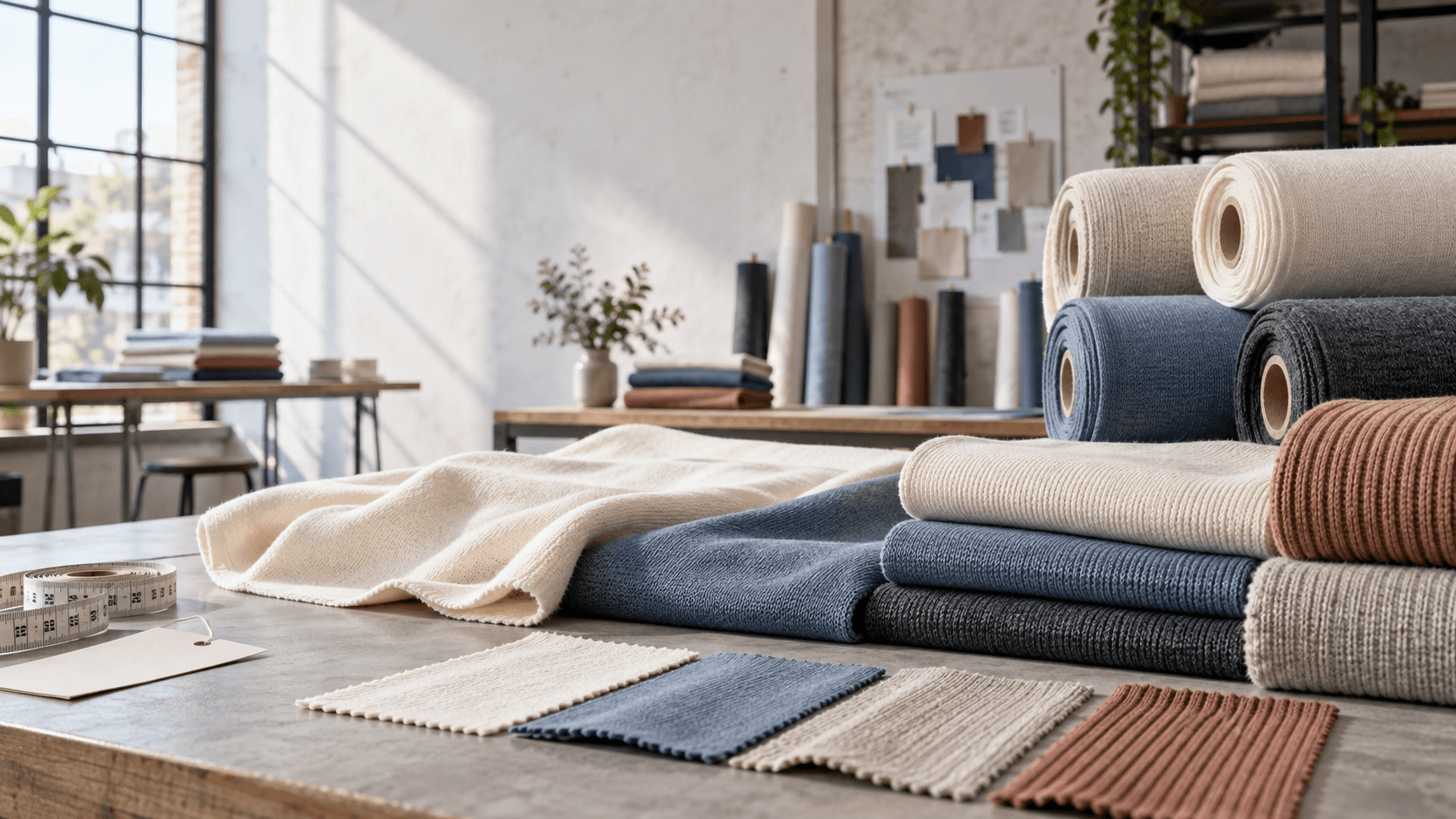
Define the garment first
A T-shirt, sweatshirt, dress, children's garment and sports product place different demands on softness, stretch, weight, stability and care. Start with the wearer, use, season, fit and target appearance.
Then list the required fibre blend, knit construction, weight, width, colour, finish and order quantity. If some details are unknown, share a sketch or reference garment so the options can be narrowed down.
Compare constructions against the brief
Single jersey can suit light, flexible garments; interlock can offer a more compact double-faced structure; rib can provide stretch at cuffs and necklines; sweatshirt fabrics can add body or warmth. Other structures and finishes may be relevant depending on the design.
These are starting points, not fixed rules. Construction, yarn and finishing all affect the final fabric, so compare representative samples in the intended colour and finish.
Test the fabric in production conditions
Check usable width, weight, opacity, drape, stretch and recovery. Sew a prototype and assess dimensions, seams, colour and hand after the intended care routine. If the fabric will be printed or further finished, include those operations in the test.
Agree the specification, tolerances and approval sample before production. This makes later deliveries easier to compare and reduces avoidable surprises in cutting and sewing.