
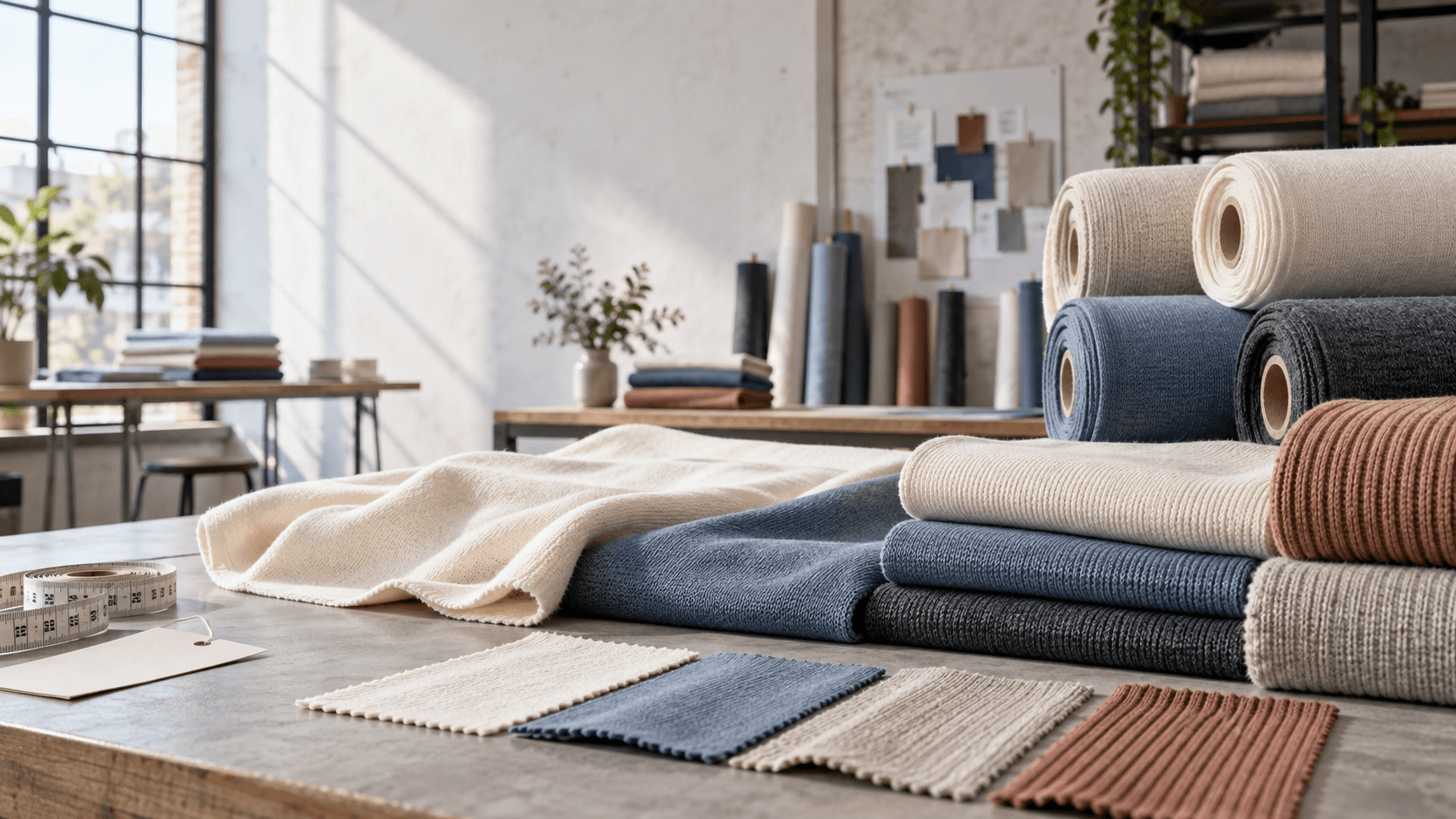
Construction affects the result
Knitted fabrics are made from intermeshed loops. The way those loops are formed influences stretch, drape, surface and stability. Fibre content, weight and finishing also matter, so fabrics with similar names may behave differently.
Single jersey is a common choice for T-shirts; interlock is a double-knit structure; rib is often used for trims; and sweatshirt fabrics can have loopback or brushed backs. Piqué offers a more textured surface. These are broad descriptions, not product guarantees.
Match the structure to the garment
Start with the fit, season, wearer and care routine. Then compare composition, weight, usable width, opacity, stretch and recovery. A sample lets you assess the actual hand and appearance rather than relying on a catalogue label.
Before ordering, confirm the exact specification, available colours, tolerances, minimum quantity and finishing options with the supplier.
From swatch to approved specification
Where fit or dimensions are important, make a prototype and review it after the intended care cycle. Document the approved sample and the parameters that matter for repeat production.
The company's current range may change; contact the team for available constructions and order-specific details.