
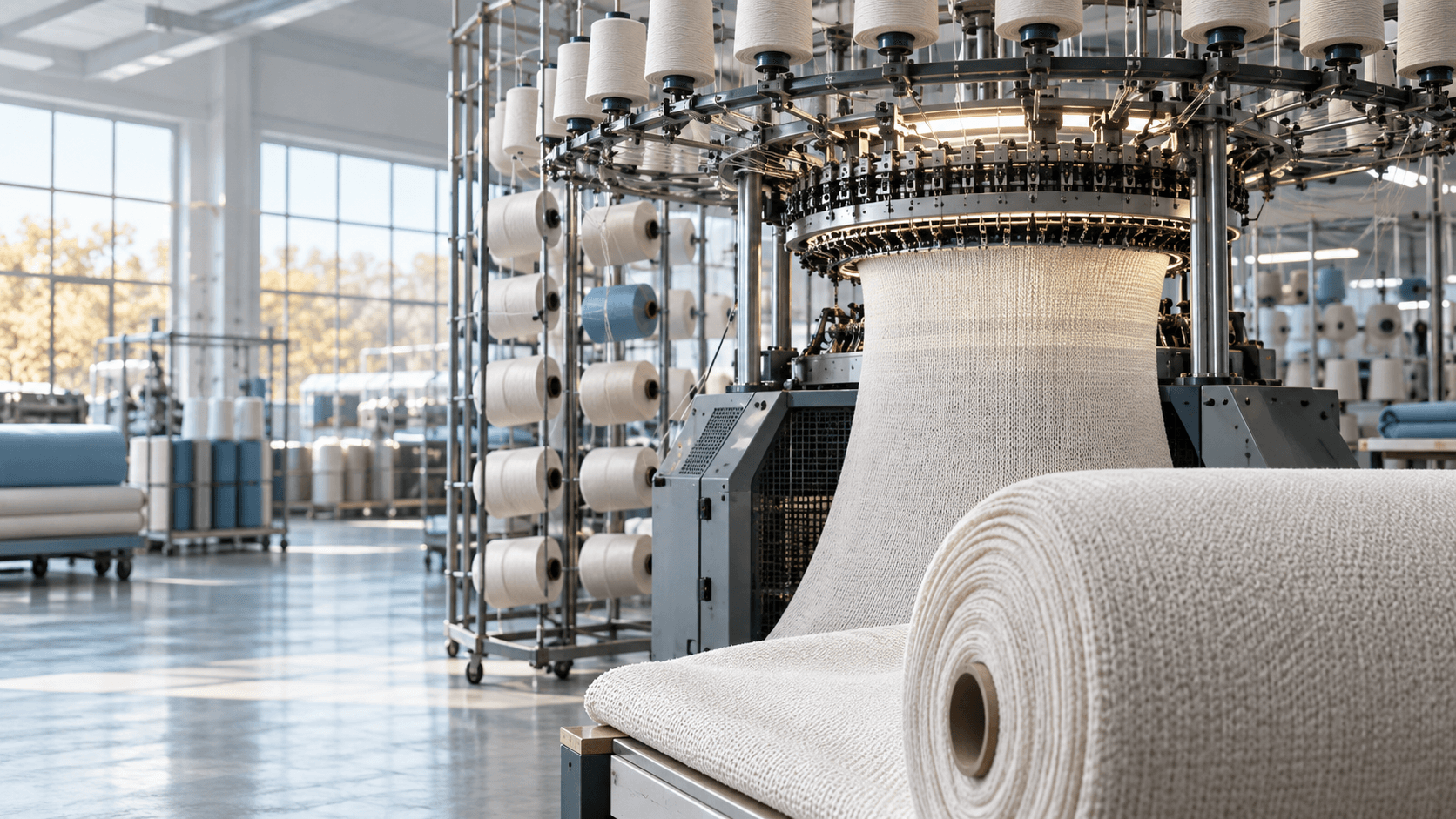
A process made up of connected stages
A finished knitted fabric is the result of several linked stages. Its appearance and behaviour depend not only on the construction, but also on yarn selection, machine settings, dyeing, finishing and parameter checks. In B2B production, each stage needs to reflect the material's intended use.
1. Selecting the yarn
The process starts by defining the product requirements. Lightweight jersey, interlock, sweatshirt fabric, rib knit and an elastane blend may each call for a different yarn. The choice can depend on fibre content, yarn count, twist, colour and the hand you want to achieve.
It is useful to know whether the fabric is intended for a T-shirt, sweatshirt, children's garment, nightwear or a technical product. The end use informs the construction and finishing decisions that follow.
2. Knitting the fabric
At the knitting mill, yarn is formed into a knitted structure. Depending on the construction, the result can be light and flexible or denser, more stable and substantial. Machine settings, construction parameters and yarn feed all matter at this stage.
The fabric may not be ready for delivery immediately after knitting. Later processes can change its width, weight, hand, colour and dimensional stability, so a sample should be assessed as part of the full production route.
3. Preparing for dyeing and finishing
Greige knitted fabric may need cleaning, surface preparation or other preliminary processes. The choice depends on the fibre content and the desired final result. The aim is to prepare the material to take colour evenly and provide a suitable base for finishing.
If a project needs a specific hand, degree of whiteness or colour performance, the parameters should be agreed before a larger production run. This helps reduce differences between the sample and the batch.
4. Dyeing or printing
Colour can be achieved by dyeing or print. The choice depends on the design, number of colours, pattern, production volume and the required surface effect. With patterned knits, controlling fabric tension and feed helps the design repeat consistently across the roll.
Colour should be checked against an approved sample and agreed tolerance, especially when a collection will be made in several batches or seasons.
5. Finishing the knit
Finishing gives the material properties needed for the final product. Depending on the brief, this may include stabilisation, softening, brushing, emerising, calendering, a silicone finish or other mechanical and chemical processes.
Not every finish suits every knit. The process should reflect the fibre content, construction and product requirements. After washing, the fabric's hand, stretch and dimensional stability can matter just as much as its appearance.
6. Quality control
Before a finished roll is prepared, the material is checked against the agreed parameters. Depending on the order, these may include:
- usable width and weight;
- colour and evenness of dyeing;
- surface appearance and dimensional stability;
- stretch and recovery;
- visible defects or interruptions in the fabric.
7. Preparing the roll for delivery
After processing and inspection, the fabric is folded or wound as agreed, identified and prepared for transport. Clear batch identification supports work in the cutting room and makes later deliveries easier to compare.
For B2B customers, the roll itself is only part of the picture. Information about the batch, parameters and fabric handling helps production planning and reduces the risk of mistakes.
Why work with a manufacturer who understands the whole process?
When knitting, finishing and quality control are part of one production setup, it is easier to discuss a fabric as a whole. The impact of a change in yarn, weight or finish can be assessed more quickly—especially when consistency between batches matters.
In summary
Knitted-fabric production is not one operation but a series of technical decisions: from yarn and construction through dyeing and finishing to inspection of the final roll. Clearly defining product requirements makes it easier to choose a process and prepare the fabric for garment production.