
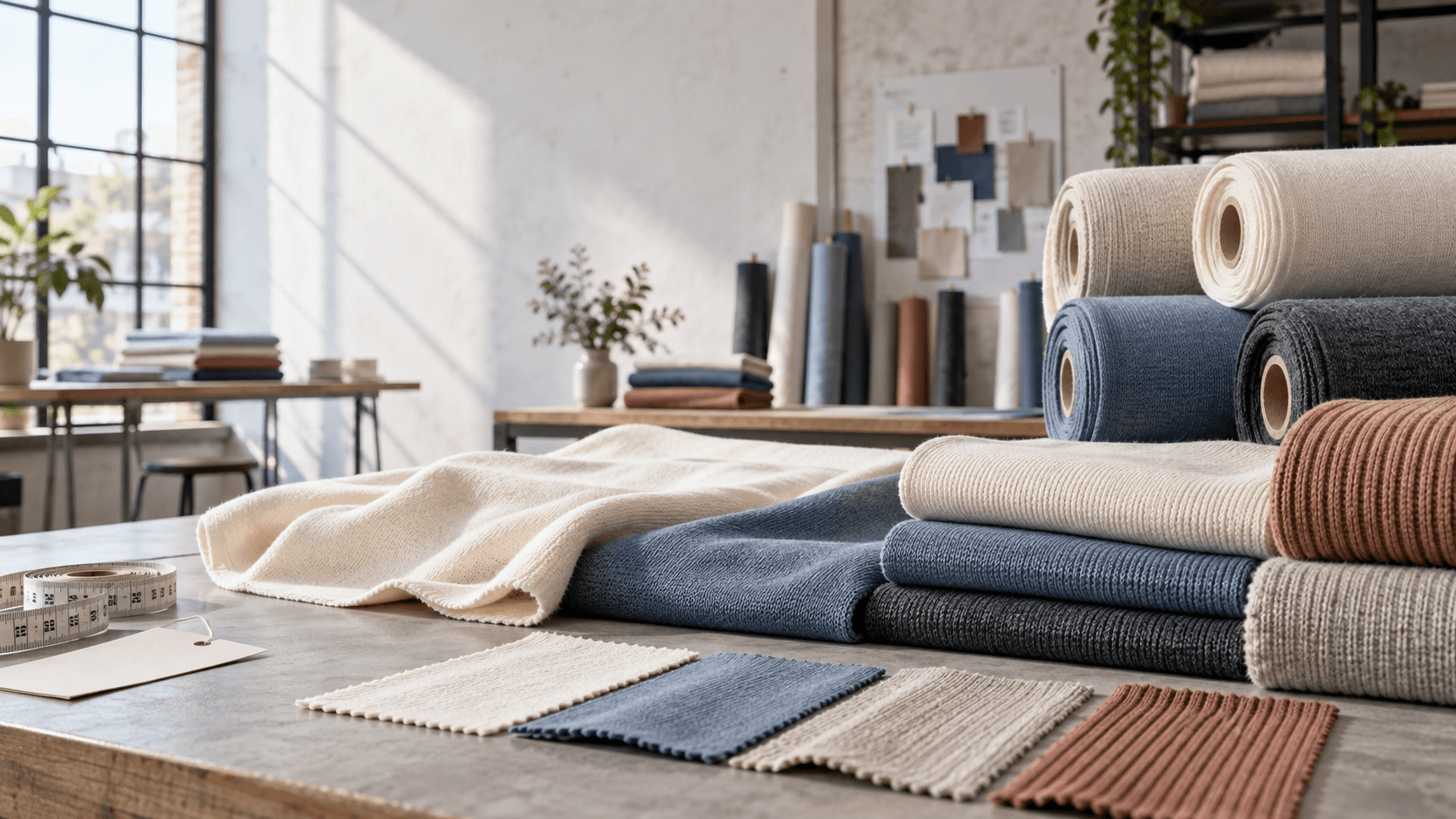
Translate the activity into fabric requirements
A fabric for a light training top faces different conditions from a close-fitting base layer or an outdoor mid-layer. Define the activity, layering, contact with equipment, frequency of use and care routine before discussing a material.
Avoid relying on broad labels such as “breathable” or “performance”. Ask which measurable property matters for the product and how it will be assessed.
Parameters worth reviewing
Start with weight, usable width, stretch and recovery. Depending on the application, also consider abrasion resistance, pilling, dimensional change, surface stability and comfort against the skin.
The fibre blend and knitted construction influence these properties, but neither tells the whole story. Finishing and the actual garment design matter too.
Test a sample in realistic conditions
A sample should be evaluated in a way that reflects the garment's intended use. Check it after the agreed washing and drying cycle, and if possible make a test garment to assess movement, seams, fit and recovery.
At our facility, routine checks include parameters such as weight, width, shrinkage and twist, as agreed for the order. Additional functional performance tests need to be specified and agreed individually; they should not be assumed from the fabric description.
Agree the specification before production
Document the target values, tolerances, measurement methods, care conditions and approval sample. This makes the sample-to-bulk comparison clearer and gives the brand and manufacturing partners a shared reference.
For a useful enquiry, send a product brief, target composition and weight, construction if known, expected quantity, colour and any required test method.
In summary
There is no single functional knit for every sport or outdoor product. Select the material against the garment's real conditions, then verify the agreed parameters on a sample. Clear testing requirements help avoid unsupported performance assumptions.