
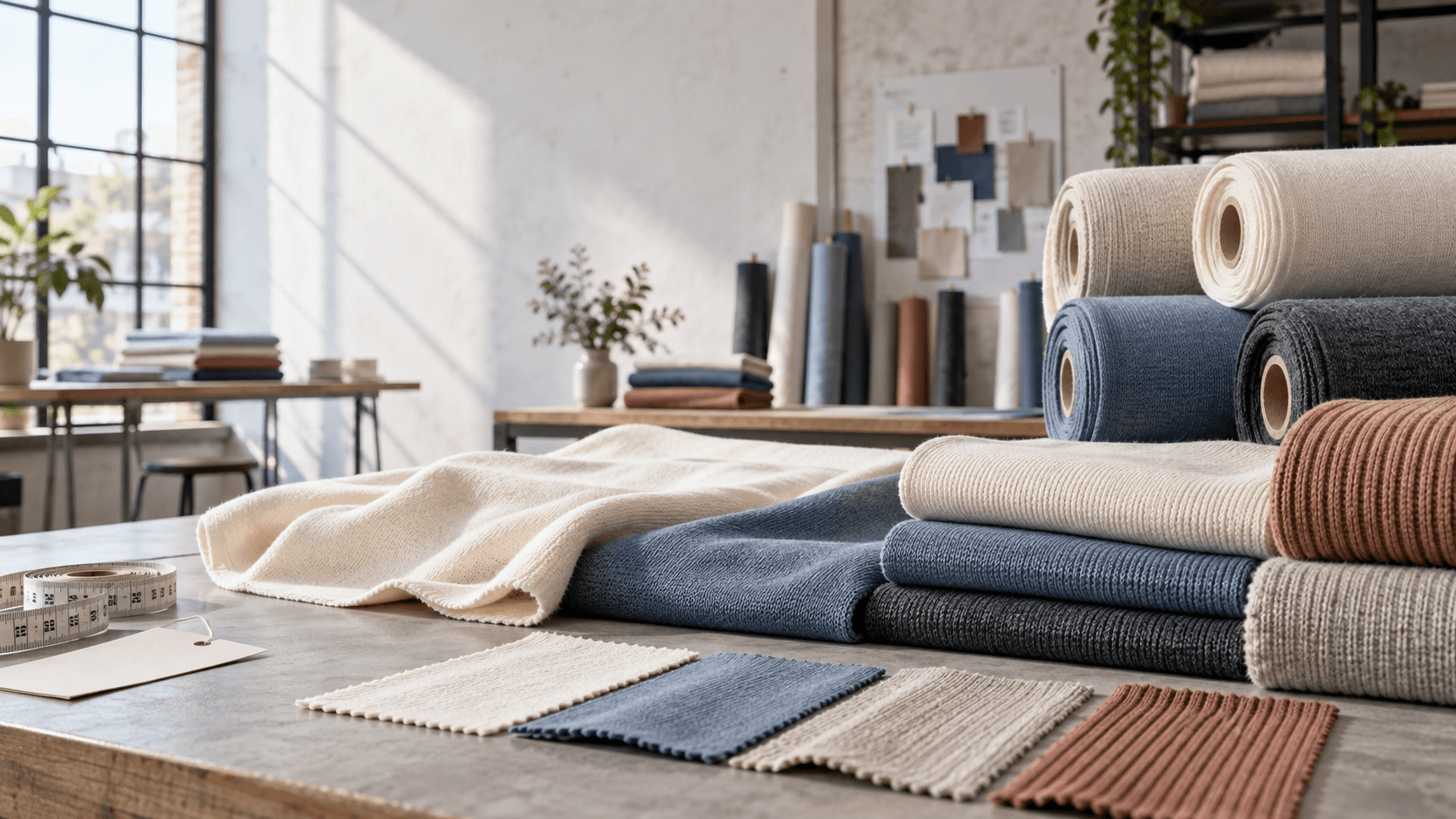
What is interlock?
Interlock is a knit construction, not a fibre name. It is made as a double-knit structure using two needle sets, with the two layers intermeshed. The face and reverse look similar, and the fabric is generally more compact than single jersey. Technically it is a knitted fabric, even when people refer to it informally as “interlock fabric”. The structure affects stretch, hand, drape and garment-making behaviour.
Both sides of a classic interlock have a similar smooth appearance. It tends to curl less at the edges than single jersey, but the knitting direction, working width and cutting layout still need to be controlled.
Interlock and single jersey compared
- Construction: interlock is a compact double knit; single jersey is a single knit with visibly different face and reverse.
- Edges: interlock is usually less prone to curling, which may make layering and handling easier.
- Body and drape: interlock often feels fuller and more stable; single jersey is often lighter and drapes more freely.
- Stretch: both stretch as knits. Confirm extension and recovery on the actual construction and garment.
- Use: interlock can suit bodysuits, sleepsuits, pyjamas and children's garments; single jersey can suit T-shirts, long sleeves, dresses and lighter clothing. The prototype—not the name—should decide.
Why it is often considered for children's clothing
A soft hand, compact surface and dimensional stability can make interlock a candidate for bodysuits, sleepsuits, pyjamas, hats, light sweatshirts and layering pieces. Similar-looking sides may also be useful where the garment interior is visible.
This does not make every interlock suitable for every children's product. Confirm fibre content, dyes and finishes, applicable certification requirements and behaviour after washing. Seams, snaps, prints and trims are part of the finished product and should be assessed with the base fabric.
The offered cotton interlock specification
The company's listed interlock is 100% cotton, 180 g/m² and 175 cm wide. These values are a starting point, not a promise that the fabric suits every pattern. Density, yarn, finishing and measurement conditions influence the perceived body and performance; fabrics with the same declared weight can differ in hand, opacity, stretch and yield.
Interlock is not automatically better. For a very light, flowing T-shirt, single jersey may be a better fit. For a compact hand, similar face and reverse, or easier edge control, interlock may be a strong candidate. It is not an insulated sweatshirt fabric or a substitute for a specialised compression or sports knit.
Check sewing, finishing and washing
Interlock's compact structure and less curling edges can help with layering and material handling, but it is still a knit. Select the needle, thread tension, stitch and feed for its stretch to avoid wavy seams, skipped stitches or damaged loops. Sew a prototype with the intended machine settings and test necklines, fastenings, side seams and bindings.
Dyeing, softening, stabilisation and printing may change width, hand, shrinkage and surface appearance. If printing is planned, test the intended base and finishing sequence. After washing, compare length and width, seam stability, wavy bindings and necklines, surface/pilling, colour or print, and softness. Use the same care protocol for every sample.
Prepare a brief before requesting a sample
Share the product and wearer, fit and stretch points, target composition/hand/weight, colour and print or other finishing, certificate requirements, care and drying conditions, expected quantity and timing. Include a reference fabric or finished garment if available. A sample and test garment can confirm whether the listed 100% cotton interlock at 180 g/m² is the right base before production.