
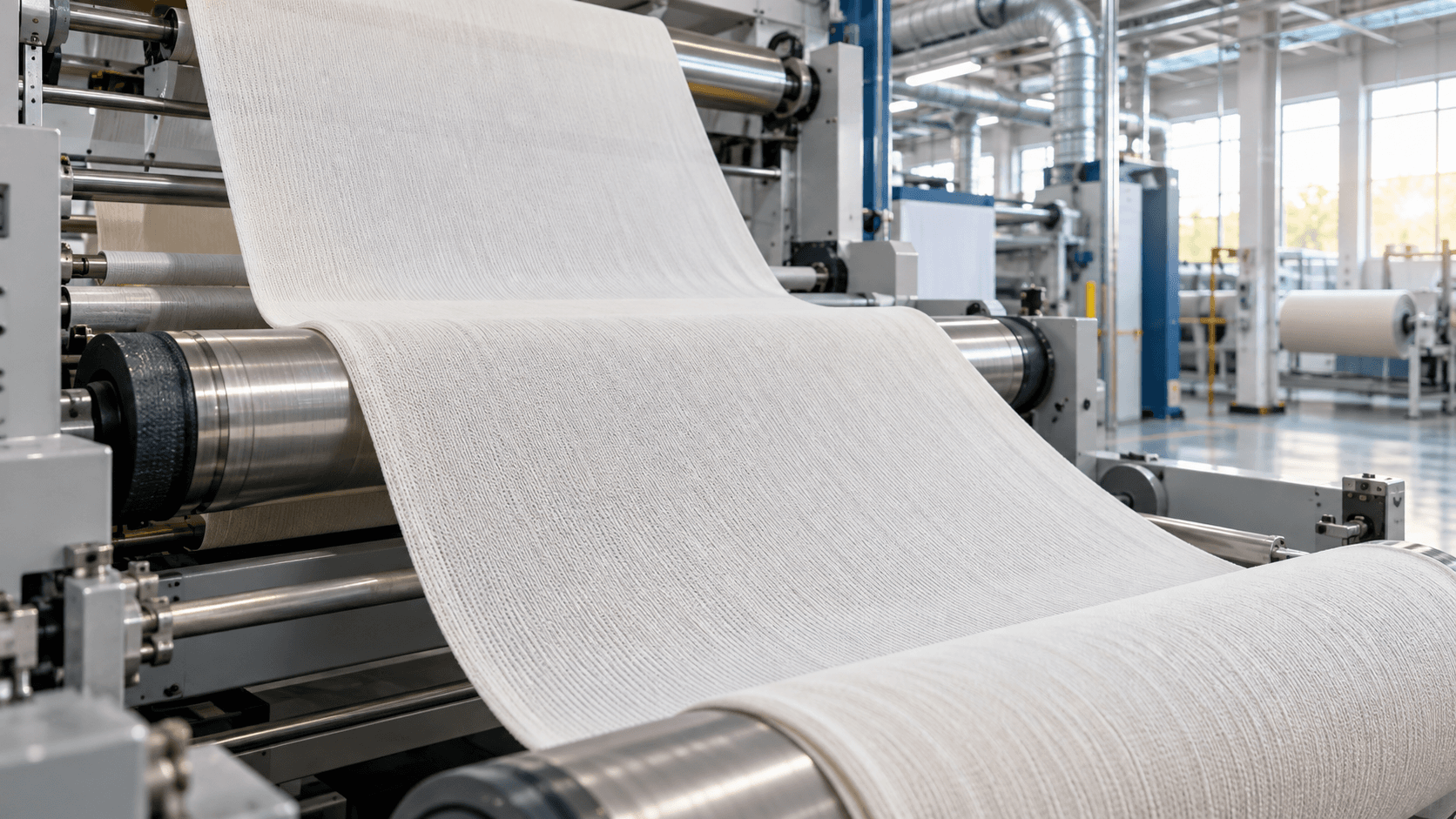
What is knit stabilisation?
Knitted fabric can change dimensions during washing, drying, cutting and sewing. For a clothing brand, this can lead to size variation, pattern-matching problems or complaints about how a garment behaves after use. Stabilisation is one finishing process that can help manage these risks.
Stabilisation aims to limit later dimensional changes and settle the fabric structure. Depending on the knit, fibre content, construction and desired result, it may involve controlled fabric handling, temperature, tension, moisture and drying conditions.
It is not a one-size-fits-all recipe. Process parameters should be selected for the fabric and its end use.
Why dimensional stability matters
Repeatability is important in garment production. If fabric width or length changes unpredictably, cutting and assembly can become less accurate. The issue may only become visible after a finished garment is washed, when its panels no longer keep their proportions.
More stable fabric can help with repeatable patterns, material-yield planning, consistent proportions across sizes, quality checks between batches and assessment of the garment after washing.
Stabilisation does not replace good pattern engineering or finished-garment testing, but it is an important part of preparing fabric for further work.
What affects shrinkage?
Many factors can change a fabric's dimensions, including fibre type, construction, knit density, tension introduced during production, dyeing and later finishing. Washing and drying conditions matter too.
Natural fibres may react differently from synthetic or elastane blends. Jersey, interlock, sweatshirt fabric and rib knit can also behave differently. Fibre composition alone is not enough to predict the final result.
Planning stabilisation for a specific product
Start by defining what the fabric will be used for. A lightweight T-shirt, sweatshirt, children's garment and close-fitting product may have different targets. It helps to share:
- the type of finished garment;
- the planned washing and drying method;
- the required usable width;
- target weight and hand;
- the cutting and sewing method;
- the acceptable range of dimensional change.
How is the result checked?
Checks can compare the fabric before and after agreed test conditions. Depending on the brief, they may cover length and width changes, skew, surface appearance, stretch and behaviour after washing. If the fabric will also be printed or further processed, the sample should include those stages too.
The most useful result is not a number in isolation, but a comparison with the needs of the finished product. This makes it easier to decide whether to adjust parameters, add a finish or revise the garment construction.
Stabilisation in B2B production
For clothing brands, agreed parameters should carry through beyond the first sample. It is useful to define batch identification, tolerances, the measurement method and how samples will be approved. These details make later deliveries easier to compare and reduce misunderstandings between the manufacturer, sewing company and brand.
In summary
Knit stabilisation helps prepare material for more predictable cutting and garment use. The result depends on matching the process to the composition, construction and intended product. A technical discussion, a trial and a parameter check before bulk production work best together.