
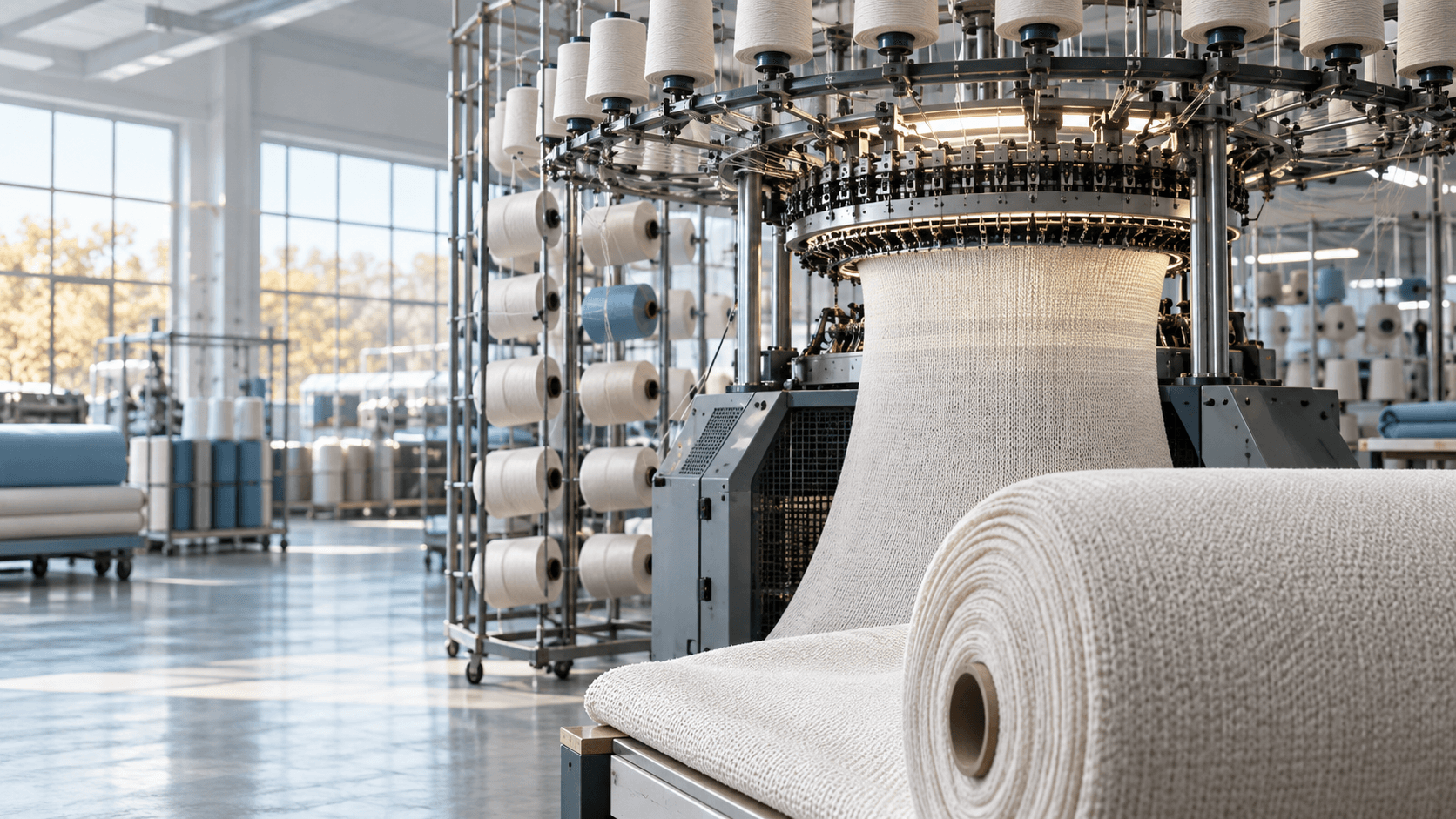
Two different ways to build a fabric
Knitted fabrics are formed from loops of yarn; woven fabrics are made by interlacing warp and weft yarns. These structures can affect stretch, drape, edge behaviour and dimensional stability.
The structure alone does not determine quality or suitability. Fibre, yarn, density, finishing, garment design and care all influence the final result.
Choose according to the garment
Knits are often selected where stretch or a softer drape is useful, while woven constructions may suit products that need a different form of stability. These are broad tendencies, not universal rules: both categories include many constructions and finishes.
Compare the actual candidate materials for weight, usable width, opacity, stretch, recovery, shrinkage, surface and care requirements. Use a sample and prototype to check the finished garment.
Avoid unsupported numerical comparisons
The source article refers to numerical differences, but such figures depend on the tested materials and method. This summary does not treat a single percentage or test result as applicable to all knits and wovens.
For an order, agree the test method, conditions, tolerances and approved sample for the specific fabric.