
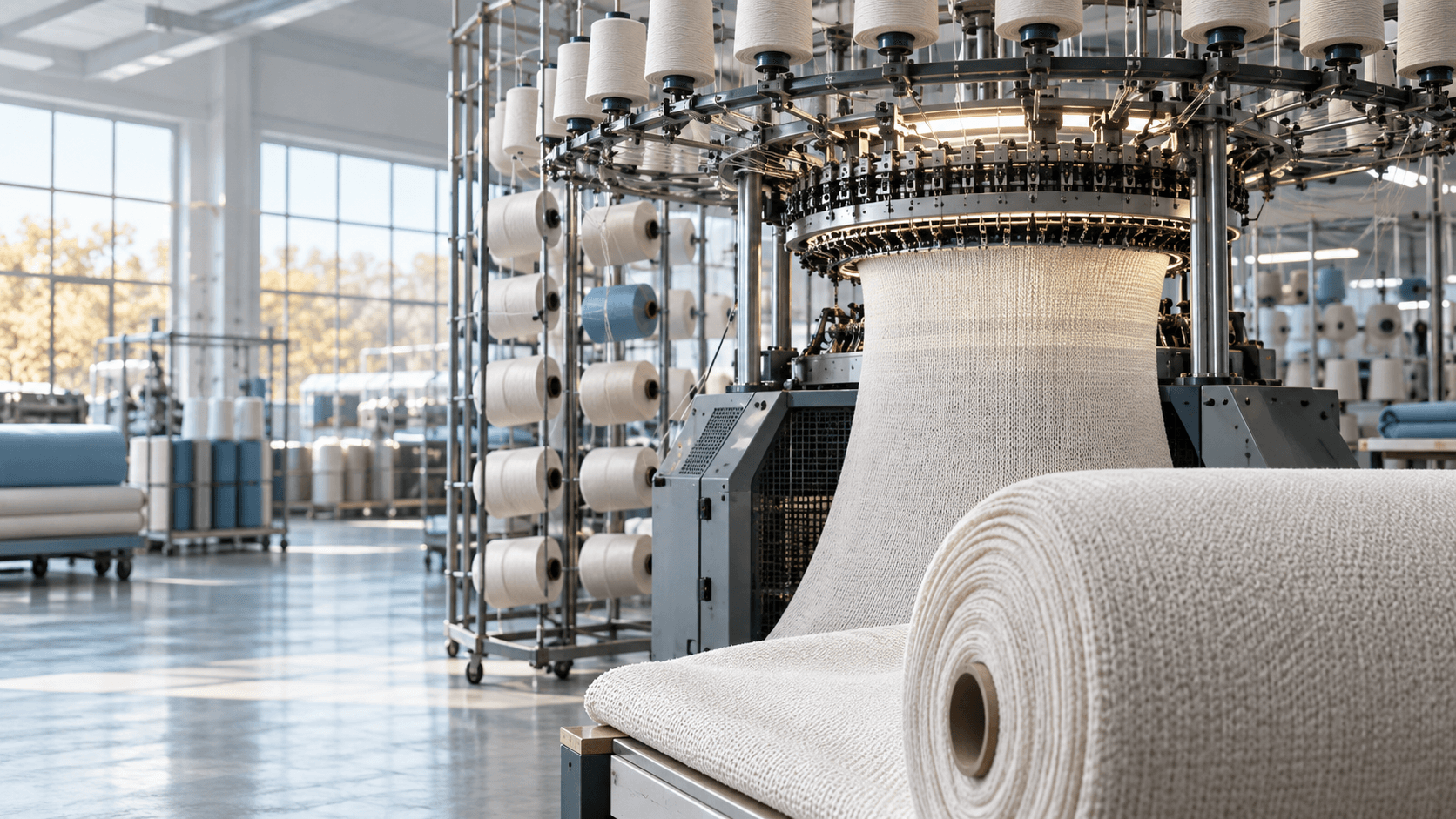
What is knitted fabric?
Knitted fabric is formed by interlooping yarn. Unlike woven fabric, its structure is built from connected loops, which can give it characteristic stretch and drape. The precise behaviour depends on construction, yarn, fibre composition, weight and finishing.
Single jersey, interlock, rib and sweatshirt fabrics are examples of different constructions. Their names are useful starting points, but a complete product specification is needed to compare them properly.
Parameters to consider
Start with the garment and its use. Consider composition, weight, usable width, stretch and recovery, opacity, surface, colour, shrinkage and care requirements. Also check whether the fabric will be dyed, printed or otherwise finished.
Published ranges can be indicative only. Confirm the actual values and tolerances for the specific material and order.
From sample to production
Request a representative sample and assess its hand and appearance. Where fit is important, make a prototype and evaluate it after the intended care routine.
Before production, document the approved sample, specification, testing conditions and acceptance criteria. This guide is general information, not a substitute for product testing or a supplier's current specification.