
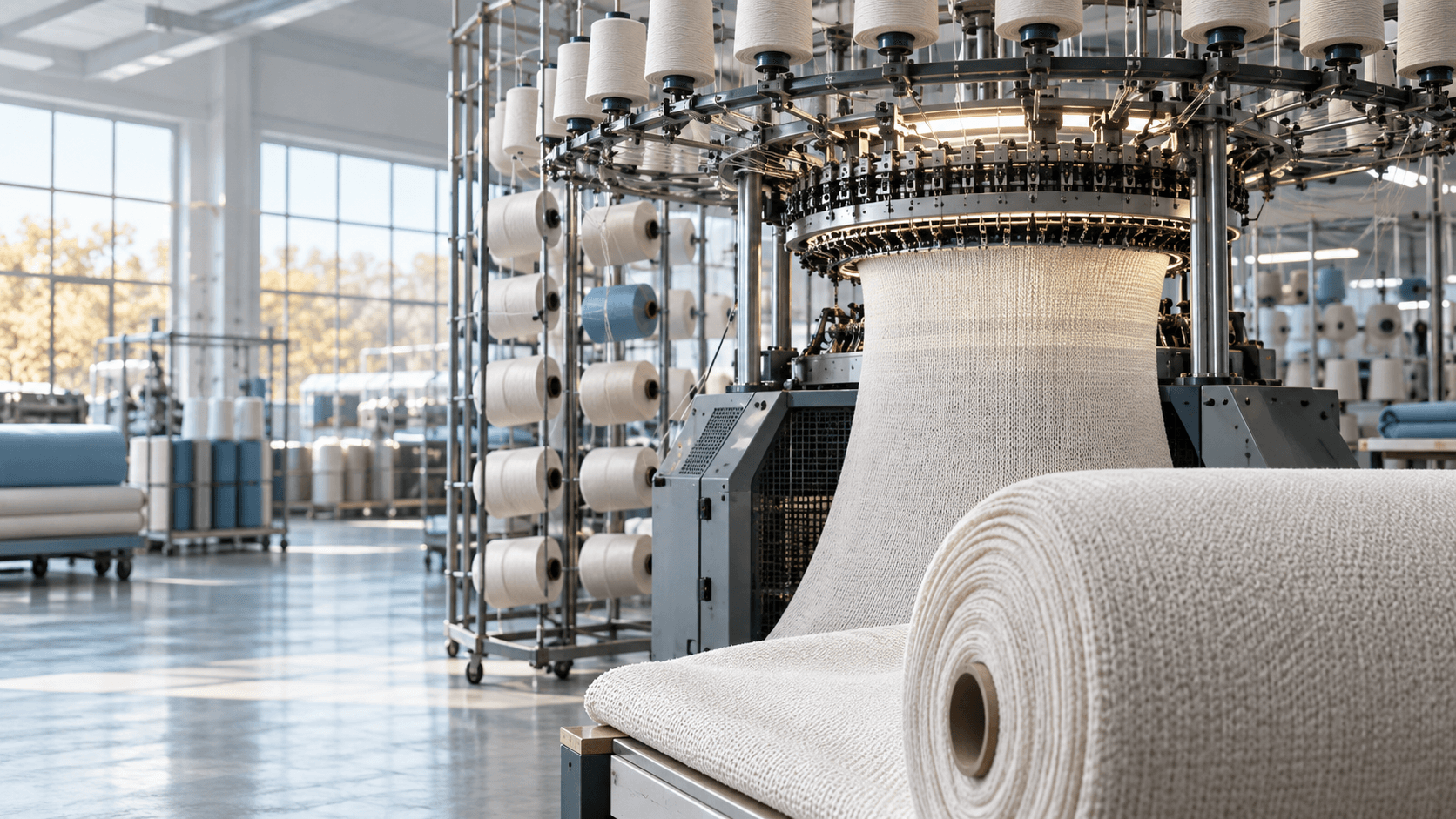
Local production is one part of a supply chain
Producing closer to a brand may affect transport distances, lead times and communication. It does not, by itself, establish the total environmental impact of a fabric or garment. Fibre origin, energy, dyeing, finishing, waste, transport and product lifetime may all matter.
The impact depends on the specific route and comparison being made. A claim about a lower carbon footprint should identify the baseline, boundary, data source and calculation method.
Ask for traceable information
For a sourcing decision, map the stages included in the product: fibre and yarn origin, knitting, dyeing and finishing, packaging, transport and garment manufacturing. Keep supplier documentation and make clear which stages it covers.
Do not infer a quantified emissions reduction from the production location alone. Use product-specific lifecycle data or a qualified assessment if a public environmental claim is planned.
Make a precise claim
This English version is a review draft. The broad carbon-reduction statements in the Polish source require substantiation and should not be repeated as facts without a documented comparison. A precise, limited claim is more useful than an unsupported generalisation.