
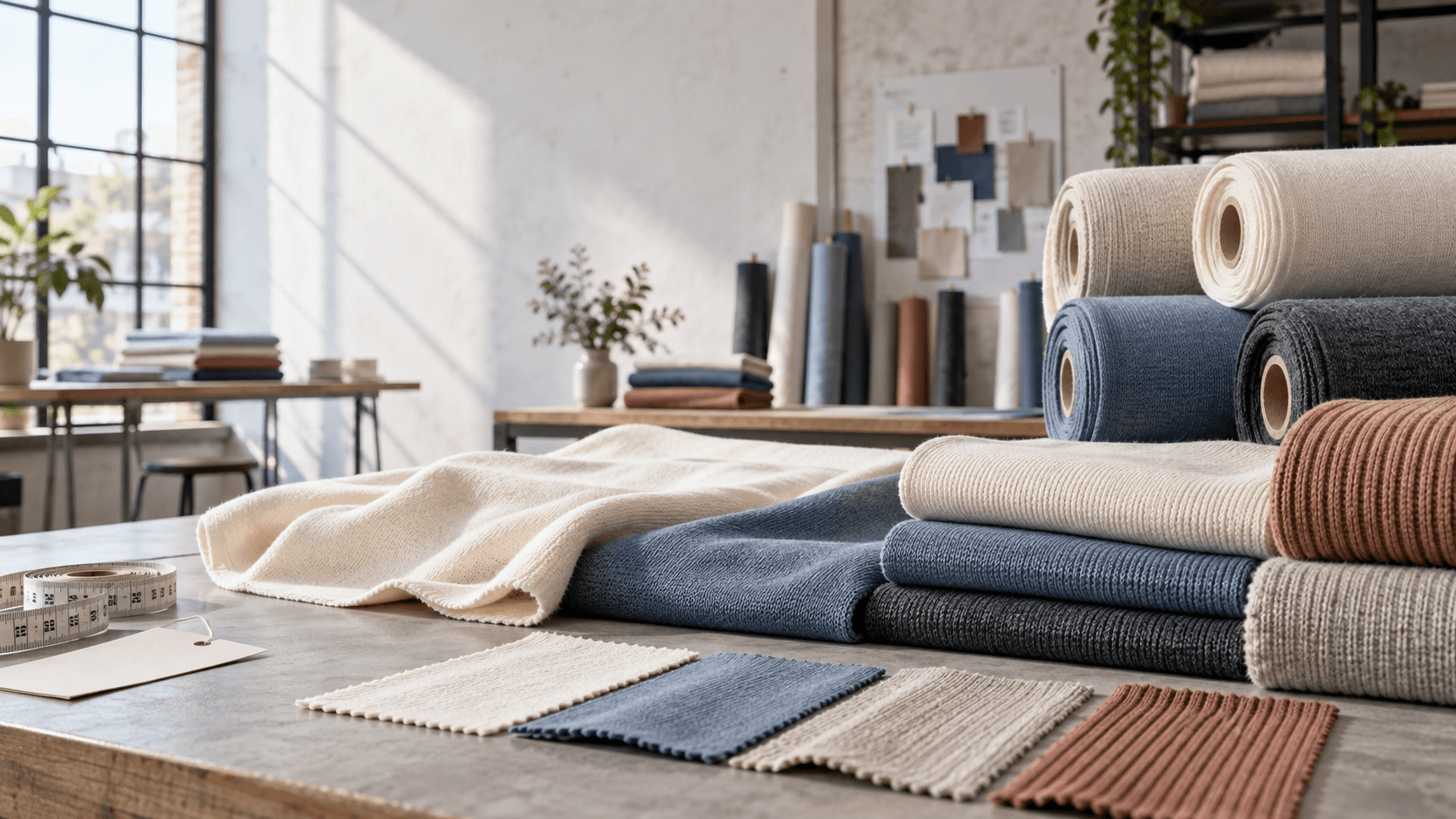
Merino is not limited to winter clothing
The Polish source article presents merino as an option for spring and summer garments as well as winter layers. A lighter construction may feel different from a heavy winter knit, but comfort depends on the fibre, yarn, structure, garment fit and conditions of use—not on the fibre name alone.
The source mentions indicative weights from 120 to 200 g/m² for different warm-weather applications. Treat these as points for discussion, not an assurance about current stock or a universal performance specification. Confirm the available composition, construction, weight, width and finish for the actual project.
Assess the fabric in the finished garment
For a T-shirt, long sleeve, dress or base layer, define the intended activity, fit, colour, care routine and target hand. Compare a sample and, where possible, a sewn prototype. Check drape, stretch and recovery, surface, dimensions after washing and comfort in realistic conditions.
If dyeing or other finishing is planned, test the intended colour and process on the selected base. Agree the sample, measurable parameters and tolerances before a production run.
Claims in the Polish source that need evidence
This English text is a review draft. The source article makes precise performance, comparative and certification claims that should not be repeated publicly until supported by current, product-specific evidence. In particular, verify:
- the statements that merino manages moisture “5×” more effectively than cotton, absorbs up to 30% of its weight, or changes perceived body temperature by 2–3°C;
- the stated UPF ranges (20–50+) and any comparison with cotton or synthetic fabrics; these require relevant test evidence for the actual construction and colour;
- claims about odour resistance, wearing a garment for several days without washing, antibacterial or hypoallergenic properties;
- all OEKO-TEX® and GOTS references, certificate holder, scope, product coverage and current validity;
- customer quotations and claimed sales results, which should be confirmed as genuine and approved for publication;
- claims of guaranteed shrinkage, colour fastness, colour repeatability, availability, order quantities and delivery times.
Questions to agree with the manufacturer
Ask for the current technical specification, sample and care instructions. For any performance requirement, request the test method, result and scope; for certification, request the current document covering the exact fabric. Confirm minimum quantity, colour development, finishing route and delivery schedule for the specific project.
Do not approve a public performance or certification claim based only on this translated draft. The German and English versions should remain noindex until the underlying claims and the current merino offer have been reviewed.