
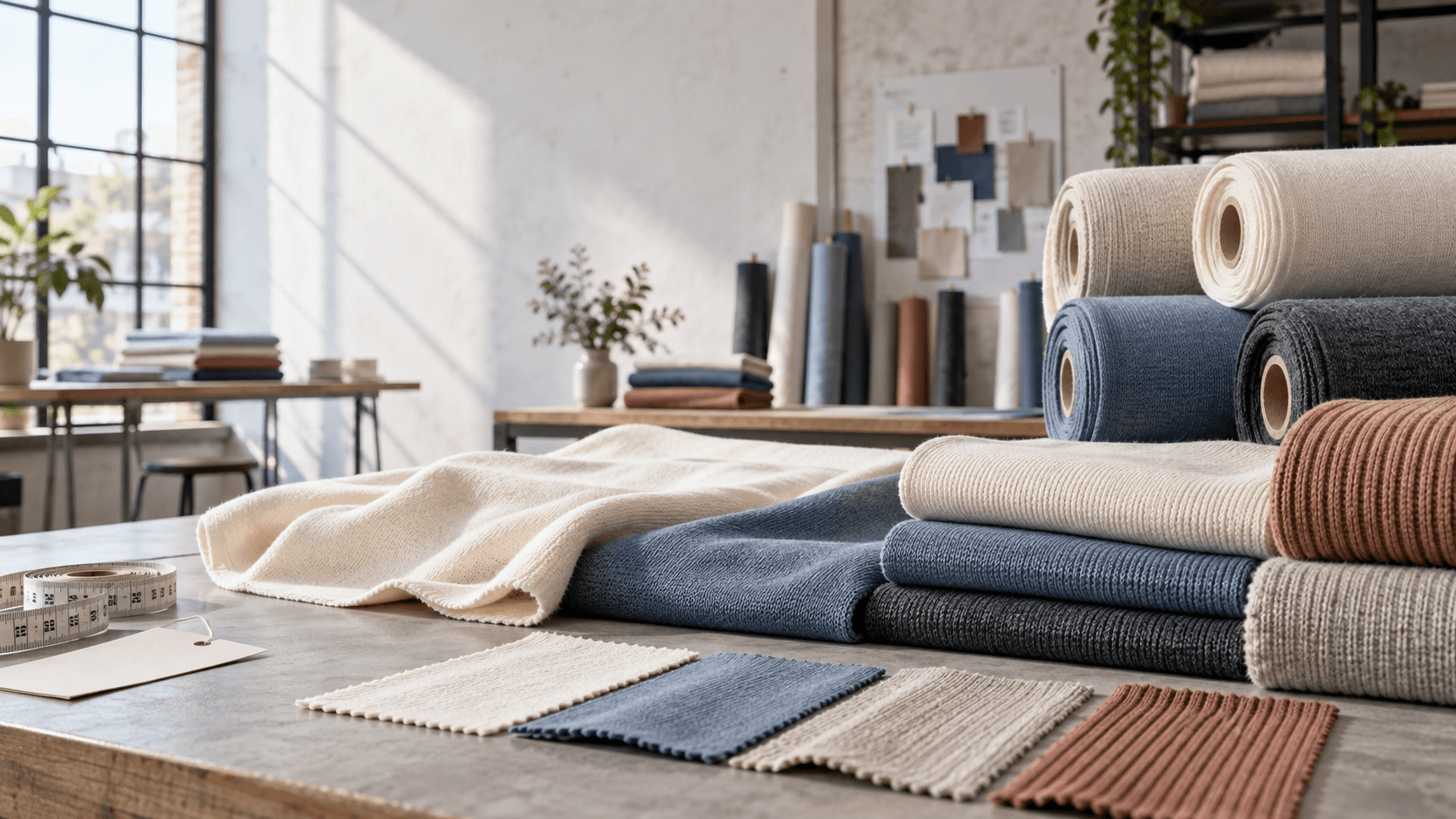
Design for the garment's life
Slow fashion encourages brands to consider how a garment is designed, made, worn and cared for. The material is one part of that decision: composition, construction, fit, finishing and repairability all influence how the product performs in use.
Cotton knits and sweatshirt fabrics may suit many everyday products, but no fibre or construction is automatically sustainable in every context. Match the material to the garment and avoid broad claims that cannot be substantiated.
Ask practical questions about the fabric
Consider whether the weight and width suit the pattern, how the knit behaves after washing, whether the finish supports the intended feel, and how reliably later batches can be compared. A sample and test garment help answer these questions before scaling a collection.
Care instructions matter too. Clear guidance that reflects actual test results helps customers look after the garment over time.
Make evidence-based claims
If a collection communicates environmental or durability benefits, define the claim precisely and support it with relevant documentation or test results. “Natural”, “eco” or “slow” on their own do not describe the full impact of a finished garment.