
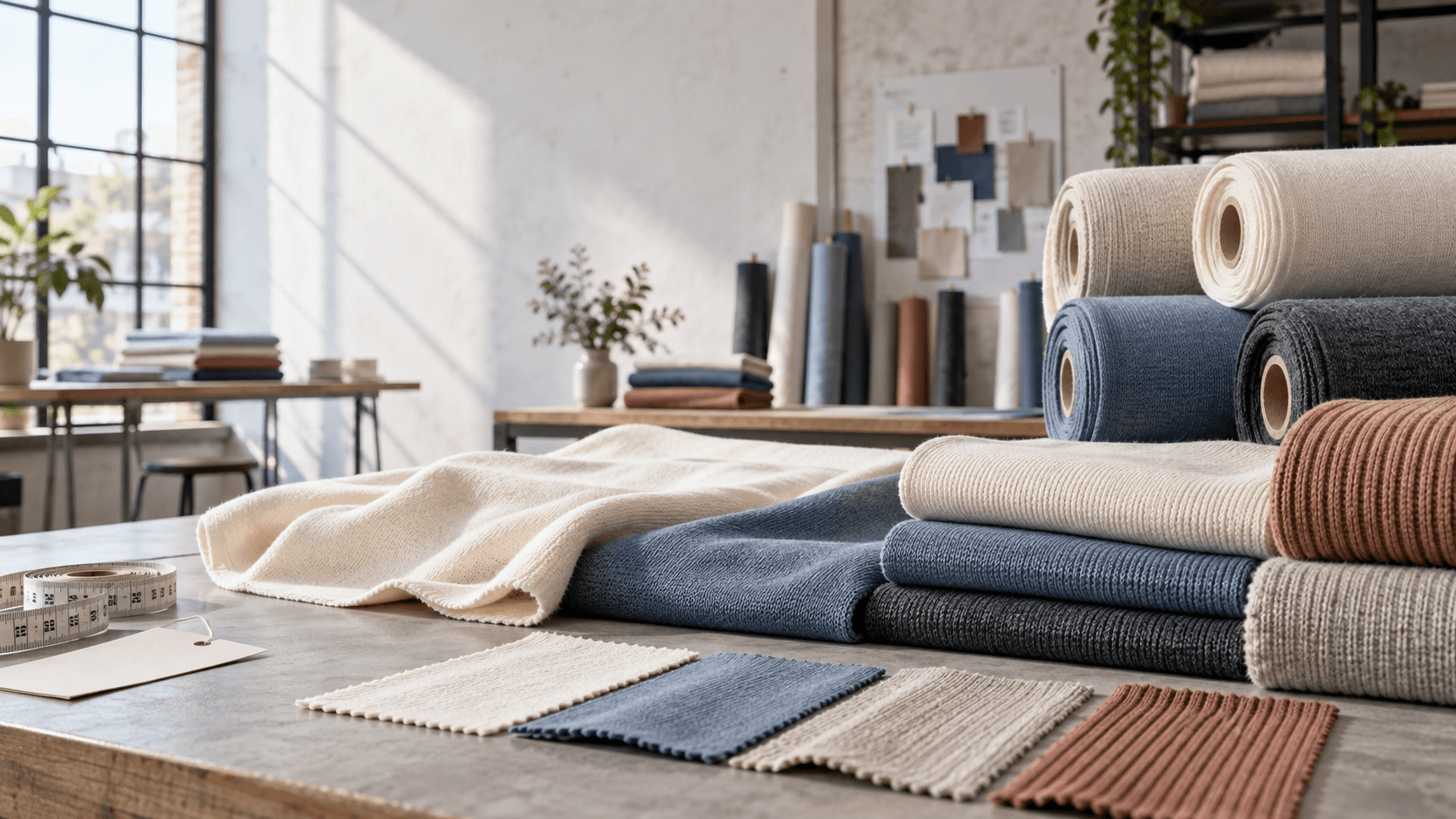
Start with the T-shirt you are making
A fabric that works for a relaxed summer tee may not suit a fitted top or a heavier premium style. Before choosing a construction, define the silhouette, intended season, target wearer and how the garment should drape.
Then consider opacity, softness, stretch, recovery and how the fabric will behave after washing. These requirements help narrow down the composition and weight range.
Cotton single jersey
Cotton single jersey is a versatile starting point for everyday T-shirts. Depending on the construction and finish, a typical range is around 100–300 g/m², with a usable width of approximately 165–195 cm. The right specification should be confirmed against the product and sample.
Check the fabric's opacity, surface, drape and tendency to curl at the edges. A swatch gives a better indication than the fabric name alone.
Cotton with elastane
A blend such as 94% cotton and 6% elastane can provide more stretch and recovery for a closer fit. A common target range is around 250–300 g/m² and approximately 175 cm wide, subject to confirmation for the selected construction and finish.
Stretch can support comfort and fit, but does not automatically make a fabric suitable for every pattern. Test recovery and the sewn garment, especially around necklines and fitted areas.
Plan finishing and printing too
Dyeing, stabilisation, softening and printing can affect the final hand, dimensions and appearance. If the T-shirt will carry a print, review the chosen fabric and print together and check a sample after the planned care cycle.
Before a larger run, verify shrinkage, width, twist, colour and surface appearance under conditions relevant to the finished garment.
A practical checklist
When asking for a fabric recommendation, share the fit and intended use, target composition and weight, colour, expected order size, finishing or print requirements and delivery timing. Confirm the usable width and make a test garment before approving bulk production.