
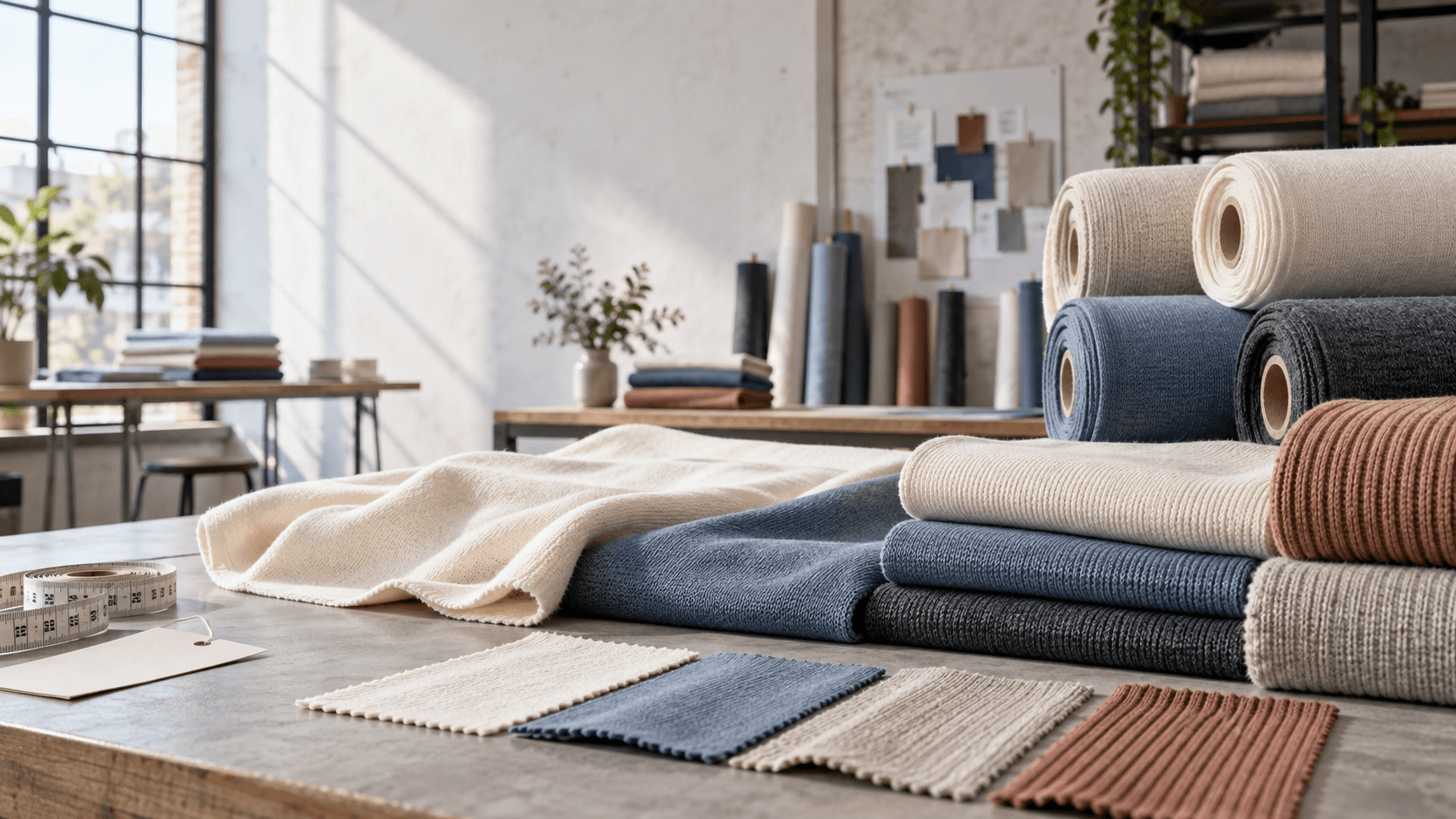
Loopback or brushed sweatshirt fabric?
Loopback has a defined, unbrushed reverse and is often a versatile option for year-round styles. Brushed fabric has mechanically raised fibres on the reverse, giving it a softer, warmer feel that can suit autumn and winter collections.
Base the choice on how the garment will be worn. Check the brushed surface after several washes for fibre shedding, pilling and changes in hand. A lightweight layer for active use may need a different feel from a warm lounge sweatshirt.
Compare the available fabric directions
These indicative ranges are starting points for sampling, not a prescription for every style:
- 100% cotton sweatshirt fabric: around 240–360 g/m²; useful for everyday, oversized and year-round sweatshirts. Check hand, shrinkage and hood drape.
- Diagonal sweatshirt fabric: around 330–500 g/m², in 100% cotton or a blend such as 90% cotton / 10% polyester; often considered for heavier premium or streetwear styles. Check garment weight, seam strength and how the rib works with the body fabric.
- Sweatshirt fabric with elastane: around 250–300 g/m², for example 94% cotton / 6% elastane; may suit closer fits or parts that need recovery. Check recovery, stabilisation and ironing temperature.
- Brushed sweatshirt fabric: exact parameters depend on the base and brushing process. Assess the nap, shedding, pilling and appearance after washing.
Weight is not the same as warmth or thickness
Weight is the mass per square metre, but it does not on its own describe thickness, softness or warmth. A 300 g/m² knit can be compact and flat or feel fuller after brushing. Density, yarn, width, finishing and loop construction also affect the finished garment.
For a relaxed sweatshirt, compare at least two weights. A lighter base may drape more easily and suit transitional weather; a heavier one builds more shape but also adds weight to the hood, pockets and whole garment.
Choose the composition and rib together
Cotton offers a natural hand and suits many everyday and streetwear styles. Polyester can change weight, stability and use characteristics. Elastane can support recovery in closer-fitting designs, but it cannot compensate for a poorly designed pattern and calls for suitable stitching, stabilisation and ironing settings.
Rib should match the body fabric in colour, weight and recovery. One available specification is 97% cotton / 3% elastane, around 180–530 g/m² and 48–90 cm wide. This broad range needs a test garment: a weak rib may lose shape, while an overly firm one can gather the body or cuffs. Confirm the rib-to-opening ratio in the prototype.
Test the whole sweatshirt before bulk production
Make a prototype with the intended rib, thread and seam type. Record body length, sleeve length and chest width before washing, then check dimensions, seam twist, colour, surface, nap and cuff recovery after the agreed wash cycles.
In your brief, include the style and season, expected hand and reverse, preferred or excluded fibres, target weight and size range, hood/pocket/rib construction, colour or decoration, care method, order size and timing. Share it with the manufacturer to compare suitable options and prepare samples before the run.