
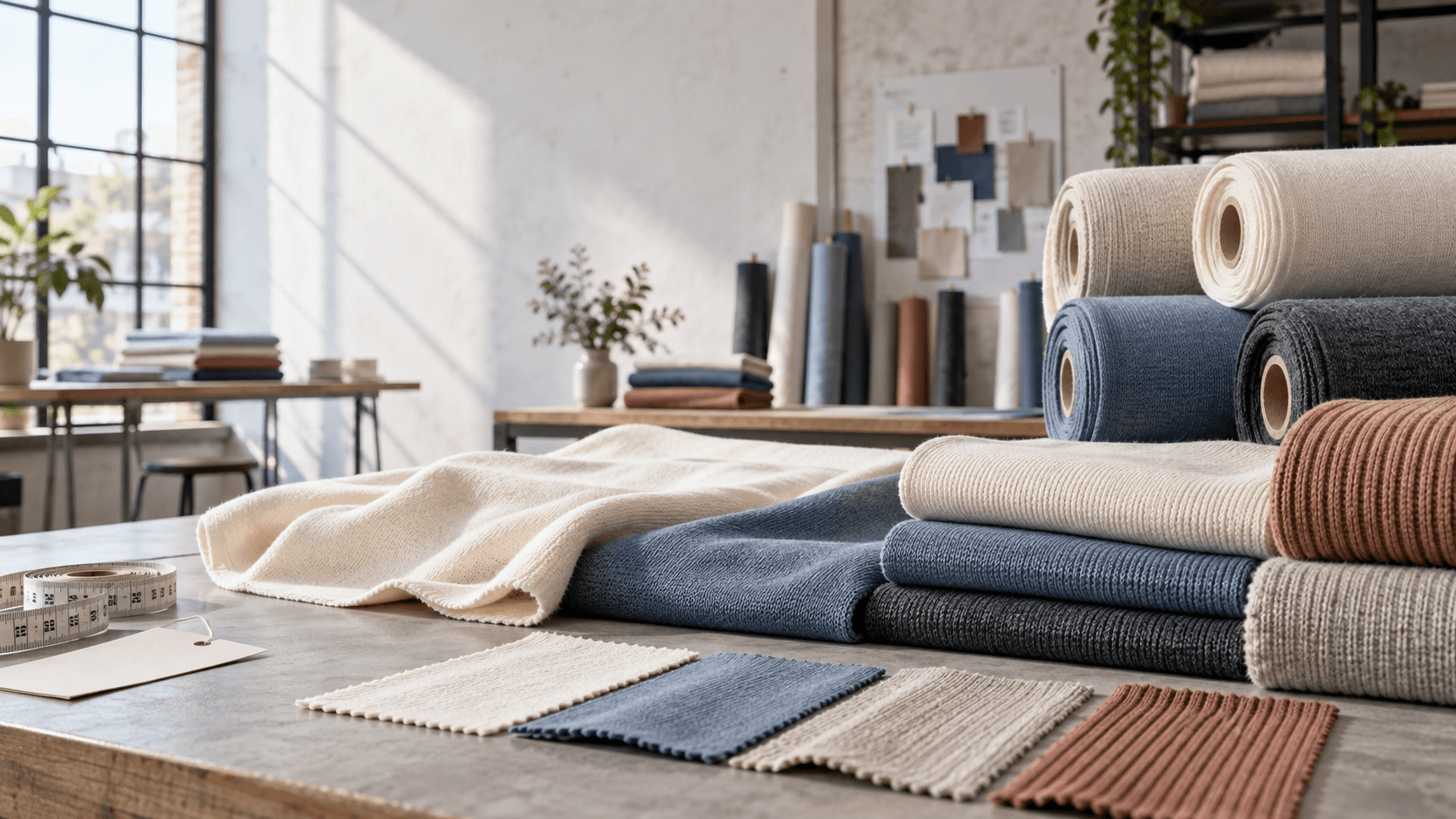
Composition is one part of the specification
Cotton blends combine fibres with different characteristics. Elastane may support stretch and recovery in fitted garments or rib details. Polyester or another fibre can change the hand, dimensional behaviour and care requirements. The result depends on the percentage, yarn, knit structure and finishing—not simply on the fibre name.
Match the blend to the product
For a relaxed T-shirt, a cotton-only single jersey may be sufficient. For a close-fitting top, leggings or a cuff, an elastane blend may be worth comparing. Consider the intended fit, movement, sewing method, wash cycle and required appearance after wear.
Do not add a fibre without a product reason. A blend can introduce different care or processing requirements, and it cannot compensate for unsuitable pattern engineering.
Test stretch, recovery and care behaviour
Assess extension and recovery in the directions the garment will stretch. Sew a representative sample and check it after the planned wash and drying conditions. Record dimensions, seam behaviour, hand and surface appearance.
When requesting a quote, include the preferred composition, target weight and width, construction, colour, finishing, quantity and delivery date. If the exact blend is not fixed, ask for comparable samples and decide against the product brief.