
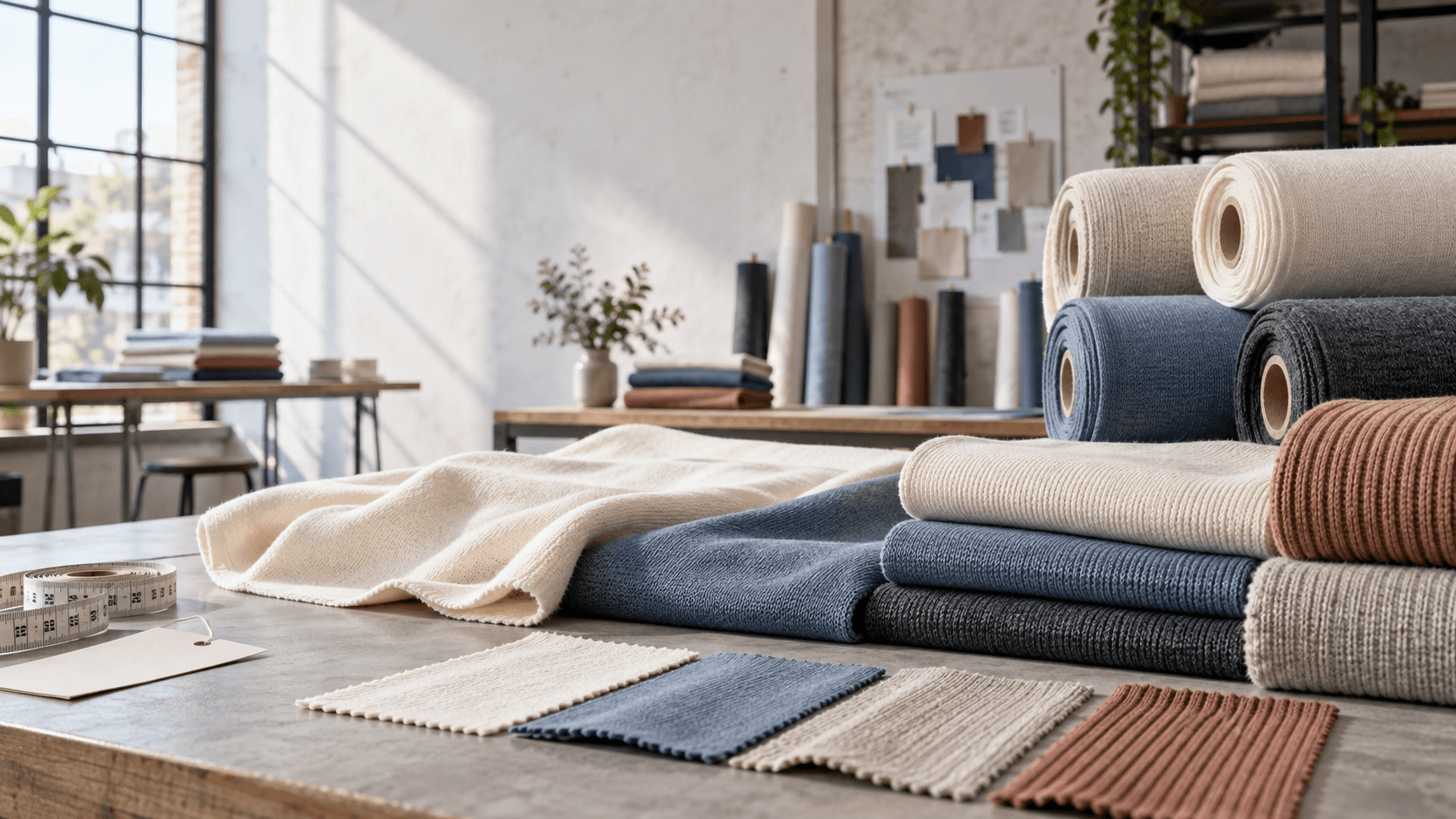
Construction changes how a knit behaves
Knits are formed from interconnected loops. The construction influences stretch, drape, edge behaviour, surface and stability. Fibre content and finishing then add further differences, so two fabrics with similar names may not behave alike.
Common constructions to compare
- Single jersey: a versatile, often lighter construction with a smoother face and a visibly different reverse.
- Interlock: a compact double-knit structure with similar-looking sides; often considered when a fuller hand or more controlled edges are useful.
- Rib: an elastic structure often used for cuffs, necklines and fitted details.
- Sweatshirt fabrics: constructions such as loopback or brushed fabrics can provide different reverse surfaces and weight for casual garments.
- Other structures, such as piqué, may create a more textured surface; suitability depends on the product and available specification.
Choose by end use, then verify a sample
Start with the garment, fit, season, wearer and care routine. Compare fibre blend, target weight, width, opacity, stretch and recovery, finishing and expected shrinkage. A sample and prototype show whether the material works in the intended cut.
The construction name is a starting point for discussion, not a substitute for the full specification. Confirm parameters and tolerances before placing a production order.